
Home / The Old Fox: Great Escapes
 Watch on YouTube
Premieres 23 October 2026 at 8:30pm UK time
The Old Fox: Great Escapes · Episode 3
The Colditz Glider: Built in Secret, Never Flown
In Colditz Castle, British prisoners secretly built a two-seater glider above the chapel, from bed slats, floorboards and sleeping-bag cotton. The Old Fox tells how it was meant to fly, why it never did, and what happened when a replica was finally launched from the roof.
Watch on YouTube Follow on TikTok
Share this story
What the fox said
How do you leave a castle on a cliff? Some prisoners decided to fly. Let's see who tried to fly out.
Colditz Castle, Germany. A wartime prison for Allied officers, many of them repeat escapers.
Walls about 7 feet thick. A long drop to the river below. Göring is said to have called it escape-proof.
Men got out anyway. In 1942, Airey Neave walked out disguised as a German officer, and reached Switzerland.
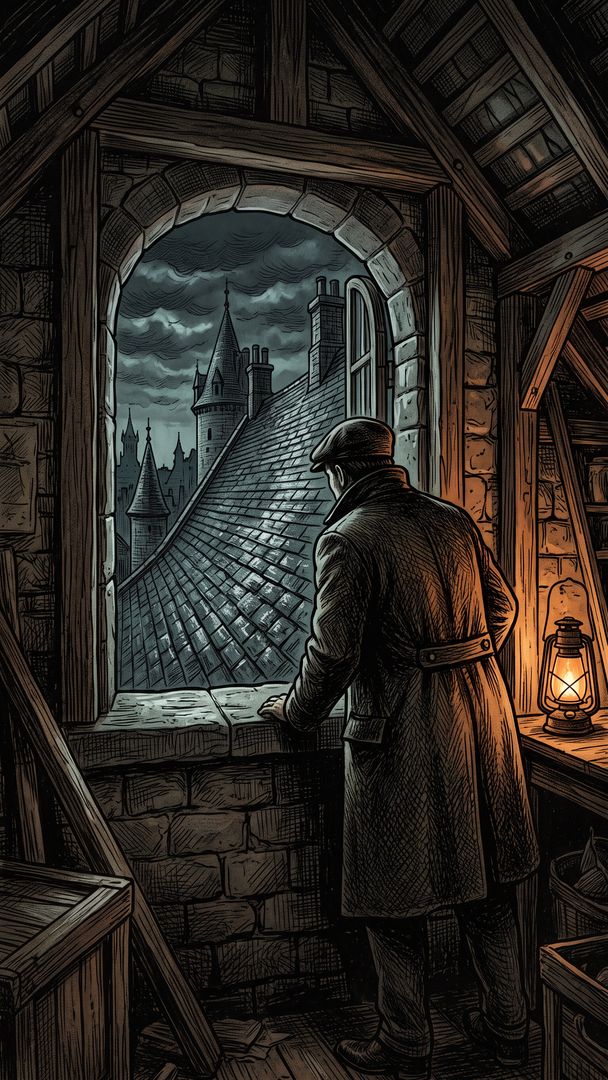
Later, Tony Rolt notices something. The roof of the chapel can't be seen by the guards.
So Bill Goldfinch and Jack Best start building, in the attic above the chapel, behind a false wall.
Wing ribs from bed slats. Spars from floorboards. Control wires from electrical wiring.
The skin: blue-and-white checked sleeping-bag cotton, sealed with boiled-up German ration millet.
A two-seater glider, with a wingspan of 32 feet.
The plan: a runway of tables on the roof. A bathtub full of concrete drops on a pulley, and flings the glider off at about 30 mph.
Over the river, to the meadows beyond. But in April 1945, the Americans arrive first. The glider never flies.
In 2000, a full-size replica flew in England.
In 2012, a radio-controlled copy was launched from the castle roof itself. It crossed the river, and came down in the meadow.
The only escape plan ever ruined by being rescued. Escape closed. Keep your nose to the wind.
Sources
- Colditz Castle in Saxony was used in the Second World War as a high-security prison for Allied officers, many of them repeat escapers. Its walls were about seven feet thick, above a sheer drop to the River Mulde (Wikipedia, 'Oflag IV-C').
- In January 1942, Airey Neave became the first British officer to escape successfully from Colditz, disguised as a German officer, and reached Switzerland (Imperial War Museums).
- Prisoners Bill Goldfinch and Jack Best, with helpers, secretly built a two-seater glider in the attic above the chapel, using bed slats, floorboards, electrical wire and sleeping-bag cotton sealed with boiled millet (Wikipedia, 'Colditz Cock').
- The plan was to launch it from the chapel roof along a runway of tables, pulled by a falling bathtub full of concrete, but US troops liberated the castle on 16 April 1945 before it was used (Wikipedia, 'Colditz Cock').
- A full-size replica was flown in England in 2000, and in 2012 a radio-controlled replica was launched from the castle roof and flew across the river (Wikipedia, 'Colditz Cock').
Spotted a mistake? Tell us in the YouTube comments and we'll correct it.