
 Watch on YouTube
Premieres 21 October 2026 at 4:30pm UK time
The Old Fox's Library · Episode 2
Stonehenge was once sold at auction
In 1915, Stonehenge went under the hammer.
Five thousand years of Stonehenge: 25-tonne sarsens traced to a wood 15 miles away, bluestones from Wales, an Altar Stone from the far north of Scotland, midwinter pig feasts, and the man who bought it for £6,600.
Watch on YouTube Follow on TikTok
Share this story
What the fox said
Pull up a chair. Tonight's page: Stonehenge.
Its first ditch was dug around five thousand years ago. Before the Great Pyramid was even begun.
The giant stones, called sarsens, weigh around twenty-five tonnes each. About four elephants.
In 2020, scientists tested a core of stone kept for sixty years by a man who helped repair it. It matched a wood fifteen miles away.
The smaller bluestones came much further. From the hills of Wales, around a hundred and forty miles away.
And in 2024, the great Altar Stone was traced to the far north of Scotland. Over four hundred miles.
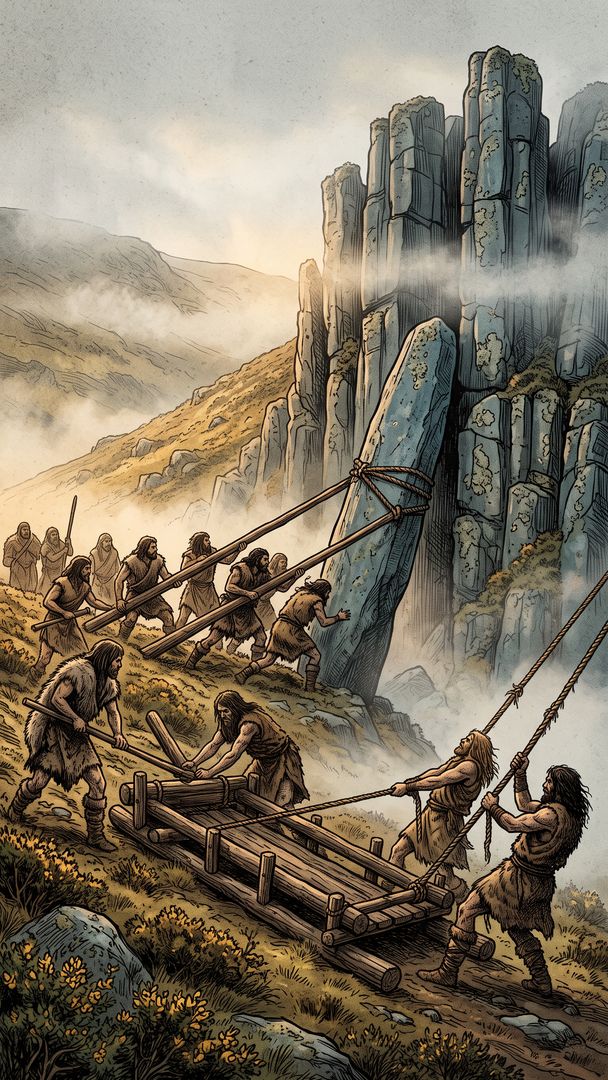
How did they move them? Nobody knows for sure. Sledges, rollers, rope, and a great many people.
But we do know why it faces the way it does. It lines up with the midsummer sunrise, and the midwinter sunset.
Nearby, archaeologists found a huge village, full of pig bones. Many from pigs killed in midwinter. Great feasts.
Now for the odd bit. In 1915, Stonehenge was sold at auction.
A local man, Cecil Chubb, bought it for six thousand six hundred pounds. Some say as a present for his wife.
Three years later, he gave it away, to the nation. And was given a title for his trouble.
Close the book. Keep your nose to the wind.
Sources
- Most of Stonehenge's large sarsen stones came from West Woods, about 15 miles (25 km) north near Marlborough (Nash et al., Science Advances, 2020).
- The match was made using a core drilled from Stone 58 during repairs in 1958, which was kept for decades and returned in 2019 (Nash et al., Science Advances, 2020).
- The Altar Stone came from the Orcadian Basin in north-east Scotland, about 430 miles (700 km) away (Clarke et al., Nature, 2024).
Spotted a mistake? Tell us in the YouTube comments and we'll correct it.